Under the skies of limitless classrooms
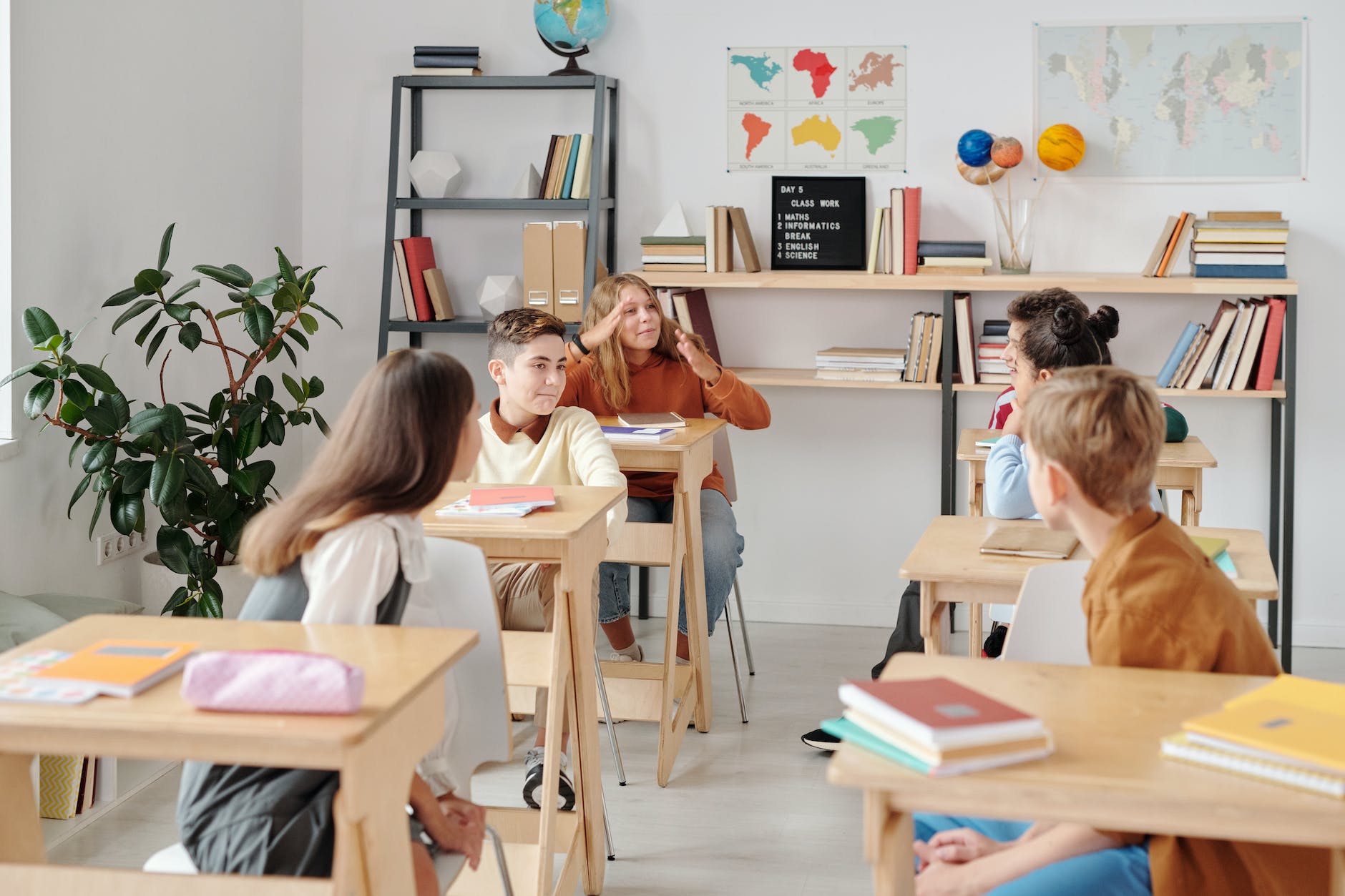
The world is a school. Every living being is a student as well as a teacher. It is our story, we are the protagonists. Different situations and hurdles are the chapters of our lives meant to teach something to us and we are the learners.
Boundaries can be defined as the socio-cultural barriers and differences leading to discontinuity in actions and interactions. Boundaries are at play in many working and learning processes. But, Learning is a never-ending process. It can never be confined or constricted to certain areas, communities or classrooms. Overtime, developments have been seen socially as well as technologically bringing remarkable interventions to the society.
To have a broader sight of the world and to find solutions to yet-to-be-solved issues arising in many parts of the world, one must go beyond the four walls of the classroom and become a global citizen. The very first thing is to connect our lives and our society with what is being taught at the educational institutions. It will surely result in we becoming socially responsible and globally aware. We need to anew learning as a beautiful experience that students learn not only what’s there in the syllabus but also grow as a person with greater and society benefitting aims that affect the global landscape.
In my view, academic curriculum teaches theoretically how nature and world work but does not provide any practical knowledge to it. As it is believed that students become more engaged and absorb information more fluently when they are in their comfortable learning environments, now is the need to go beyond the theory accounts in textbooks and the cramming up or so called memorizing of facts to learn more deeply beyond the classroom borders about the profound similarities and differences between the people around us.
Teaching and learning beyond borders will truly happen once we let ourselves grow, not only on the facts we already know but also on the things that the world can still teach us.
Olden times are often referred to as golden times for a reason. Considering education then v/s now, I think, though it has advanced a lot with the coming up of modern technology but the real education about self and society was taught in those ages only when the children learnt life values while staying connected to their roots. System of education had a completely different style as compared to that of present day system. When the profession was limited to a few people, it was pure and spiritual but now it has started getting diluted. Teachers then, were very much sincere, professional and passionate about teaching. To talk about the ancient period when children learnt from their ‘Guru’, they used to link every lesson with the things around them which helped them not only in understanding the lesson to its depth but also gain knowledge through experience. We might say that education then had no limits but if we actually think about it, borders were present because of the primitive ways of teaching and lack of technological assistance. On the good side, maintenance of the time schedule is one of the features to be appreciated. Earlier, life lessons were given to embibe in moral values in a student enhancing his inner qualities to lead his life on a positive direction.
Rabindranath Tagore’s education philosophy consists of naturalism, humanism, internationalism, humanism and idealism. In his words educational institutions shouldn’t be “a dead cage in which living minds are fed with food that’s artificially prepared. Hand work and arts are the spontaneous over flow of our deeper nature and spiritual significance.” NEP 2020 have shifted focus on this philosophy only aiming at making schools child friendly rather that child centric.
At present, thanks to the technological advancement that knowledge is accessible anywhere and everywhere even to each and every corner of the smallest streets. While it is like a real challenge for those teachers to cope up with the modern methods and their ways of teaching. Everyone is shifting to digital education which is in huge demand these days but we must not forget that there are still rural communities that have not reached to these modern inputs and believe in value education at homes and gurukuls.
Every invention has its pros and cons. Technology has helped develop a spirit of competition among students and also among educational institutions. But it has demerits too. Technology cannot teach what physical education can (love and care for fellow beings, fraternity, team work, social skills, etc.). When we sit in a classroom, we get an opportunity to interact with new persons and mingle with them sharing and discussing their views and ideas over a subject. On the other side, technology has created barriers by limiting children to smartphones, laptops, TVs and video games which hinder their social interaction skills because of which they develop social phobias like anxiety, extreme feeling of shyness and hesitation.
In my opinion, it is agreed that one should go with time and ever-growing technology but also make sure that they do not forget their roots.
Breaking the walls of classroom, students are reaching out to their international partners online as well as offline via different student exchange programmes. Student exchange programmes allow students to learn about different culture and traditions alongside exploring and interacting with their peers, exchanging knowledge and materials.
Change is inevitable but one should make sure that it does not damage the quality of education and its real purpose.
 Little Miss Talkingopaedia
Leave a comment